

Kimberley A. Tufts, REALTOR®
The Modern Group™ eXp Realty
Your Local Trusted Real Estate Professionals
Blog
Start searching for your new home Below ⬇️ No Login Required
Real Estate Insights
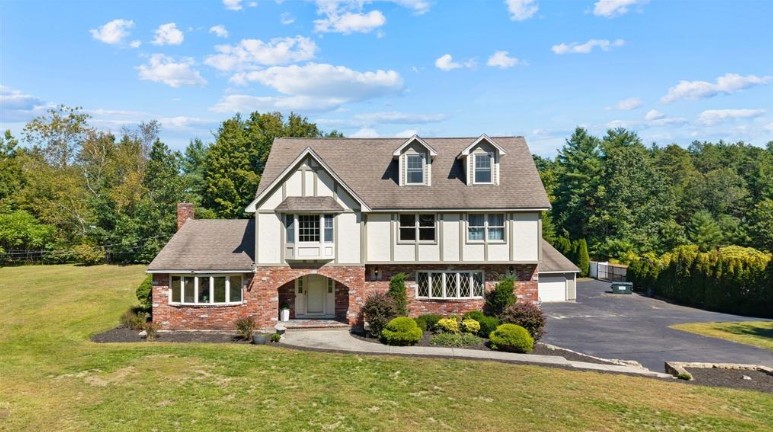
Moving from MA to NH in 2026? How to Win in Bedford
Every year, buyers from Massachusetts cross the border into Southern New Hampshire looking for more space, a different pace of life, and long-term financial stability. However, moving from Massachusetts to New Hampshire requires an entirely different real estate strategy. Buyers crossing the border often apply Massachusetts rules to the New Hampshire market and end up losing out on multiple offers.
Winning a home in Bedford right now requires understanding local contract norms, adjusting your budget for different tax structures, and knowing exactly how to negotiate without giving up your protections.
Why Do Massachusetts Strategies Fail in New Hampshire?
Massachusetts and New Hampshire share a border, and the housing markets often overlap. But when it comes to contracts, negotiations, and offer structure, the process is not identical. The most significant difference lies in how contracts are handled.
In Massachusetts, buyers are accustomed to a two-step process. You submit a preliminary "Offer to Purchase" with a small deposit, and about ten days later, you sign a comprehensive "Purchase and Sale" (P&S) agreement.
When buying a house in NH vs MA, this two-step dance does not exist. New Hampshire uses a single, comprehensive Purchase and Sales agreement right from the start. When you submit an offer on a house in Bedford, you are submitting the full, legally binding contract immediately.
Common Mistakes MA Buyers Make:
Treating the initial NH offer as a casual starting point.
Assuming they can negotiate smaller details or add contingencies days later.
Failing to include all necessary addenda and disclosures upfront.
Because sellers in Bedford receive the complete contract on day one, your offer must be flawlessly prepared. If your agent treats the New Hampshire P&S like a simple Massachusetts offer form, a local listing agent will notice. They will advise their sellers to choose a buyer whose paperwork shows clear intent, strong preparation, and readiness to close.
How Does the NH Market Differ from the MA Financially?
A major shock for anyone moving across the border is the initial property tax bill. Buyers often see a Bedford tax listing and immediately rethink their budget. This reaction happens because they are only looking at one side of the equation.
New Hampshire does not have a state income tax or a general sales tax. To fund local services and highly-rated schools, towns rely on property taxes. Massachusetts has a state income tax, which means property taxes can appear lower on paper.
To understand your true purchasing power, you have to look at your total financial picture, not just the monthly mortgage payment.
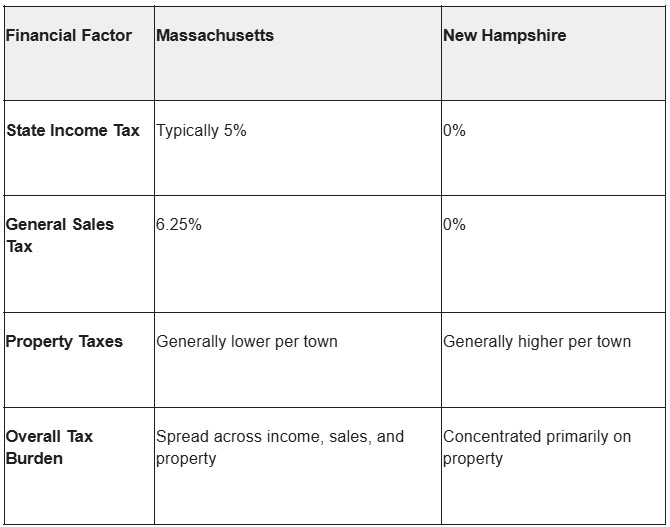
For many professionals, the money saved by eliminating the 5% Massachusetts income tax more than covers the higher property tax bill in Bedford. As a result, you might actually afford a higher purchase price in Southern NH than you could in MA, while keeping your net monthly living expenses exactly the same.
What Contract Norms Actually Protect Bedford Buyers?
Over the past few years, a dangerous trend has emerged where buyers waived their home inspections to win bidding wars. While this aggressive tactic was common in Massachusetts, applying it blindly in New Hampshire is a massive risk.
Bedford is a suburban and semi-rural community. The infrastructure here is different from that of densely populated MA cities. Homes often rely on private systems that require specialized inspections to ensure they are safe and functional.
Important Inspections in Southern NH:
Septic Systems: A failed septic system can cost tens of thousands of dollars to replace.
Private Wells: You need to test for water quality (including arsenic and uranium) and water quantity (flow rate).
Radon Air and Water: Radon is naturally occurring and very common in the bedrock of New England.
Instead of waiving your right to inspect these systems, you can use a "monetary threshold" strategy. This means you include an inspection contingency in your contract, but you agree not to ask the seller for repairs unless a single issue exceeds a specific dollar amount, such as $2,000.
This strategy shows the seller that you will not nickel-and-dime them over minor repairs like a leaky faucet or a loose handrail. At the same time, it fully protects you from catastrophic hidden costs, like a cracked foundation or a failing septic leach field.
What Should You Know About Southern NH Home Maintenance?
Relocating to Southern NH means adapting to different home maintenance routines. If you are used to living in a Massachusetts town with public utilities, owning a home in Bedford requires learning a few new systems.
Many properties in Bedford use oil or propane for heating, rather than the natural gas lines commonly found in MA cities. You will need to set up delivery accounts with local fuel companies and monitor your tank levels during the winter to ensure you do not run out.
Additionally, maintaining a private well and septic system requires routine care. You will need to pump your septic tank every few years and service your well pump and water filtration systems. These are not reasons to avoid buying a house in Bedford, NH. They are simply part of homeownership in this region. Knowing this upfront removes the guesswork and helps you budget accurately for annual maintenance.

How Do You Coordinate Buying in NH While Selling in MA?
Managing a cross-border move is a complex project. The timing has to be precise. You need the funds from your Massachusetts sale to purchase your new home in Bedford, but you cannot be left without a place to live in between closings.
A "Subject to Suitable Housing" clause is often used in these situations. If you are selling your MA home first, this clause protects you by stating the sale is contingent on you finding and securing a home in NH.
Steps for a Coordinated Move:
Understand Your Local MA Market: Get a precise valuation of your current home so you know exactly how much equity you have to work with.
Get Pre-Approved in NH: Speak with a lender who understands cross-border transactions and can approve you based on the impending sale of your MA property.
Align Closing Dates: Work closely with your real estate agent to negotiate back-to-back closings. Typically, you will sell your MA home in the morning and buy your Bedford home in the afternoon.
This level of coordination requires a project manager, not just a salesperson. Miscommunication between the MA listing agent, the NH buyer's agent, the lenders, and the title companies can cause major delays that put both transactions at risk.
Why Choose Kimberley A. Tufts for Your Relocation?
I, Kimberley A. Tufts REALTOR®, help professionals and families moving from Massachusetts to Southern New Hampshire navigate this complex transition with clarity and strong advocacy. As a Bedford, NH real estate agent, my goal is to simplify the process so you can move forward with total confidence and zero guesswork.
As a former educator, I focus on giving you the real, data-driven facts. I will explain exactly how the NH market differs from MA, walk you through the specifics of private wells and septic systems, and ensure your offer is structured to win without compromising your financial safety.
Backed by The Modern Group, I handle the details of your cross-border move. I communicate directly with your Massachusetts agent and your lender to keep the timeline strictly on track. You receive clear strategy, calm guidance, and measurable results. My job is to act as your decision filter, protecting your best interests every step of the way.
Frequently Asked Questions About Moving to NH
Is it cheaper to live in NH or MA?
It depends on your specific income and lifestyle. While NH has higher property taxes, the absence of a state income tax and sales tax often results in a lower overall tax burden for working professionals.
Do I need a different real estate agent to buy in NH?
Yes. Real estate licenses are state-specific. You need an agent licensed in New Hampshire who understands local contract laws, private utilities, and specific town ordinances in places like Bedford.
Why are property taxes so high in Bedford, NH?
Because New Hampshire does not collect income or sales tax, local municipalities rely heavily on property taxes to fund public services. This includes the highly-rated public school systems that attract many buyers to the Bedford area.
Can I use my MA lender to buy a house in NH?
You can, as long as your lender is licensed to operate in New Hampshire. It is highly recommended to use a lender who is actively experienced in the NH market, as they will understand local appraisal timelines and tax structures better.
Relocating from Massachusetts to Southern New Hampshire is a smart financial and lifestyle decision, but it requires a strategic approach. By understanding the differences in contracts, tax structures, and inspection norms, you position yourself as a strong, educated buyer. If you are planning a move across the border and want a clear, data-driven plan, reach out to me today to start your Bedford home search.

Power Up Your
Content Strategy
Unlock your brand's potential with our expert content marketing solutions.

Kimberley Tufts: Revolutionizing Real Estate with Integrity and Expertise
Kimberley’s commitment to her clients truly sets her apart in today’s real estate market. With more than eight years of experience, over $155M in closed volume, and 290+ homes sold, she is a top-producing 4X eXp ICON Agent and a RealTrends Verified Top 1% NH & MA REALTOR®. Her attention to detail, genuine care, and strong communication and negotiation skills have earned her a reputation for exceptional client service.
With a background in education and finance, Kimberley brings a unique ability to explain the process clearly, anticipate challenges, and guide clients through even the most complex transactions with ease. Whether you’re buying or selling, in any price point or situation, her proven track record and unwavering dedication make her a trusted partner in achieving your real estate goals.